

Language
en


According to the State Bank of Vietnam (SBV), Region 2 Branch, remittance inflows to Ho Chi Minh City reached more than USD 2.032 billion in Q2 2026, up 1.4% from Q1.

According to the State Bank of Vietnam (SBV), Region 2 Branch, remittance inflows to Ho Chi Minh City reached more than USD 2.032 billion in Q2 2026, up 1.4% from Q1. Total remittances in the first six months of the year amounted to USD 4.037 billion, down 22.8% year on year and 21% compared to the second half of 2025.
Although total remittance inflows declined compared with the same period last year, the pace of decline showed signs of easing, with a slight quarter-on-quarter increase recorded in Q2. Meanwhile, the composition of remittance inflows remained stable, with Asia and the Americas accounting for more than 81% of total remittances in the first half of the year, highlighting the central role of these two source markets.
In Q2, Asia remained the largest source region for remittances to Ho Chi Minh City, contributing more than USD 1 billion, accounting for 49.3% of total inflows and increasing 9.8% from the previous quarter. The Americas ranked second with USD 672.6 million, representing 33.1%, followed by Oceania, Europe, and Africa.
For the first half of the year, remittances from Asia totaled USD 1.916 billion, accounting for 47.5% of total inflows, while the Americas contributed USD 1.375 billion, representing 34.1%. Together, these two regions continued to account for more than 81% of total remittances to Ho Chi Minh City.
This suggests that the major remittance corridors have remained largely unchanged, despite transaction volumes being affected by the global economic environment.
According to the SBV Region 2 Branch, the decline in remittance inflows during the first half of the year was primarily driven by external factors.
Slower global economic growth, a persistently strong U.S. dollar, and tighter immigration policies in several countries have affected employment, income, and the ability of overseas Vietnamese to send money home.
In the Americas, particularly the United States, which accounts for a significant share of remittances to Ho Chi Minh City, inflationary pressures, rising living costs, changes in the labor market, and tax policies affecting certain money transfer transactions have continued to put short-term pressure on remittance volumes.
Domestically, remittance transactions processed through the banking system also declined as funds have increasingly been distributed through a wider range of payment channels, while domestic investment opportunities have yet to become sufficiently attractive to attract remittance capital.
From another perspective, a decline in total remittance inflows does not necessarily indicate weaker demand for transfers to Vietnam. Instead, overseas Vietnamese workers are adapting to higher living costs, greater income pressure, and a more uncertain economic environment, resulting in short-term adjustments to the size or frequency of remittance transfers.
According to the SBV Region 2 Branch, remittance inflows to Ho Chi Minh City are projected to reach USD 8.6-8.9 billion for the full year 2026. The regulator expects quarter-on-quarter improvements to become more evident in the second half of the year as global interest rates gradually ease, exchange rates stabilize, and remittance promotion initiatives continue to take effect.
Source: Tuoitre
---
Despite ongoing uncertainty in the global economy, the scale of remittance inflows and the stability of key remittance corridors continue to position Vietnam as an important remittance destination in the region.
At the same time, increasing market segmentation is raising the bar for companies operating in the cross-border payments sector. Competitive advantage is no longer defined solely by payout networks, but also by transaction speed, transfer costs, user experience, and the ability to connect across payment ecosystems.
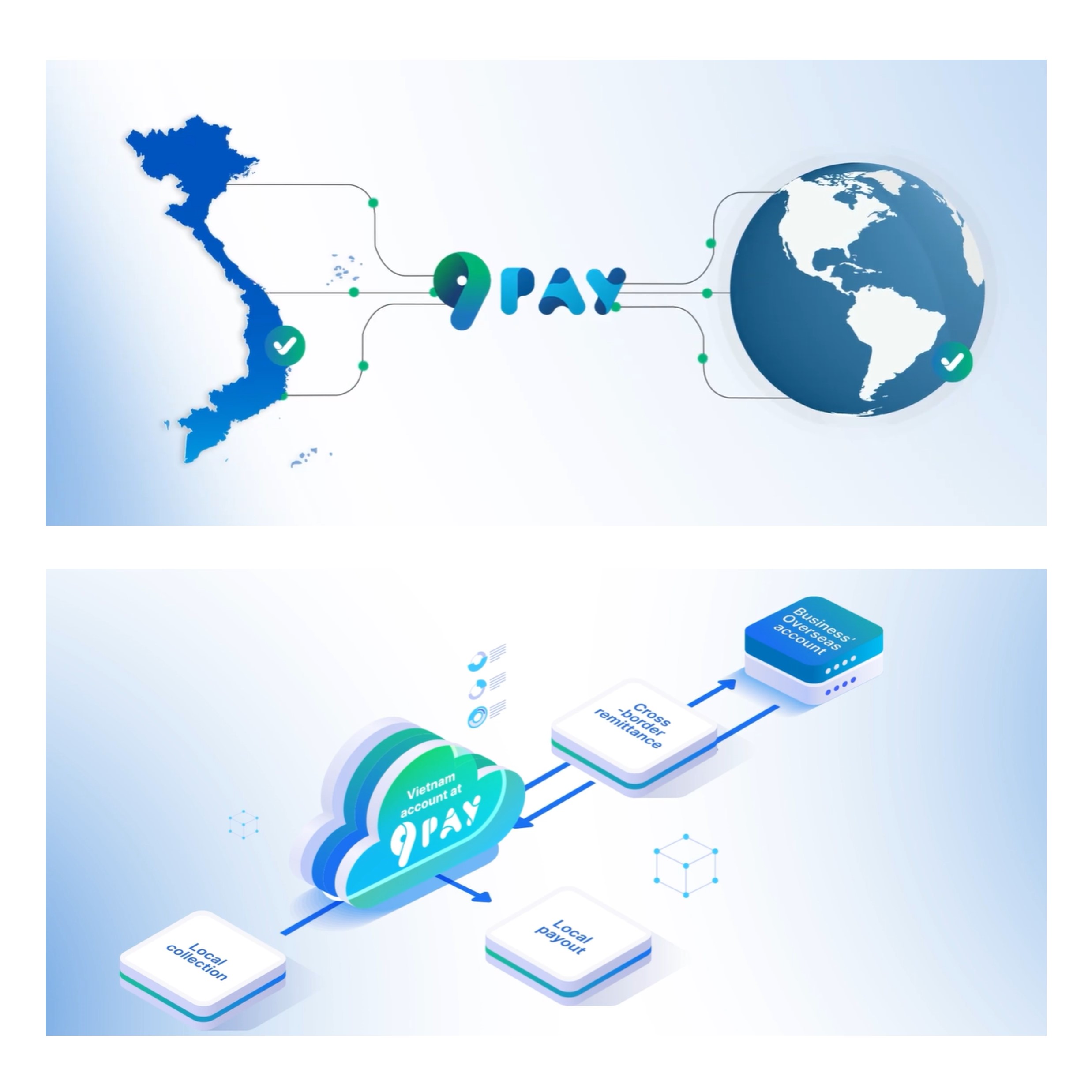
Holding both Payment Intermediary License issued by the State Bank of Vietnam and Direct Foreign Currency Receiving and Payment License, 9Pay serves as a bridge between international remittance companies and the Vietnamese market through a compliant payout infrastructure, supporting connectivity with the domestic payment network and enabling remittances to reach beneficiaries safely and conveniently.
MAYBE YOU ARE INTERESTED

 Promotion news